Gables Guide: A Look Back at the City’s Origins and Its Enduring Historic Neighborhoods
Since its incorporation in 1925, Coral Gables has long withheld the highest standards in beauty and aesthetics, creating a high standard of living, and as a result, an esteemed reputation as one of the most sought-after, and expensive, cities in the country. Characterized by detailed Mediterranean Revival architecture and an expertly planned landscape and infrastructure that have developed over the last 100 years, today Coral Gables stands as one of the best examples of The City Beautiful Movement.
Originating around the present-day Granada Golf Course, Coral Gables started as a humble Merrick family plantation consisting of primarily wild, untouched land. Years later, many critics thought George Merrick was crazy to plan such an elaborate community inland, away from South Florida's popular ocean shoreline (he would eventually dig 20 miles of canals connecting the Biltmore to Biscayne Bay and advertise "40 miles of waterfront property"). Merrick quickly saw success however, gathering a team of experts to plan every aspect of the city: Frank Button, who worked under Olmstead in the creation of Central Park, took on the landscape design; Denman Fink, Merrick’s cousin and renowned illustrator, handled the marketing; the charismatic Doc Dammers led the sales; and an incredible team of architects including George Fink, Walter De Garmo and Robert Law Weed worked under supervising architect and color palette expert Phineas Paist to create Mediterranean Revival masterpieces and the Riviera of the United States.
Another of Merrick's perceived crazy ideas? He also wanted an inclusive city, planning more modest yet beautiful “Homes for the Homefolk” for the middle class and more extravagant “Homes of Distinction” for the upper class.
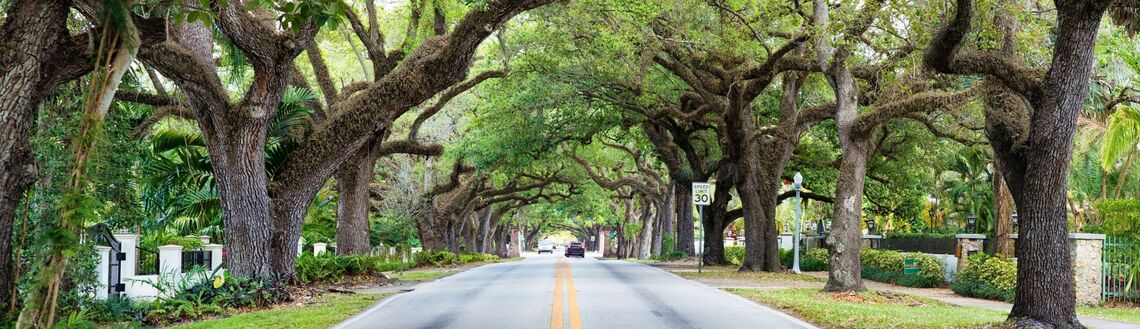
The product: an aesthetically pleasing and fully functioning destination with incredible infrastructure featuring wide, tree-canopied streets, unique yet stylistically cohesive homes, public spaces to gather and enjoy from vibrant parks to monumental destinations like the Biltmore Hotel and Golf Course and Venetian Pool, and quality educational and medical institutions including the University of Miami. Miracle Mile, the central downtown district filled with gourmet restaurants and charming boutique shops, continues to grow and evolve as well providing residents with the convenience of urban living minutes from their quiet residential streets.
In recent years, the Gables has made national news for its expensive gated communities topping the “most expensive zip codes” lists. As Coral Gables celebrates its centennial birthday, let’s take a look at its origins: the very first neighborhoods that continue to embody Merrick’s vision for The City Beautiful.

The Country Club Section
Centered around the iconic Biltmore Hotel and Riviera Country Club, the Country Club Section is filled with a mix of Homes of Distinction, especially around the Donald Ross-designed golf courses, and Homes for Homefolk, ideally nestled between the resort and Miracle Mile. Residents enjoy peaceful, walkable streets shaded by towering banyan and oak trees, moments from tennis, golf, and restaurants at the Biltmore and a multitude of shops, restaurants, parks, and more along Miracle Mile.
Notable Streets:
- Granada Boulevard: lined with some of Central Coral Gable’s most extravagant mansions along the Biltmore Golf Course
- Anastasia Avenue: linking the rest of the city to The Biltmore, also lined with historic mansions and intricate churches
- Santa Maria Street: running through the center of the Riviera Golf Course, this street is home to the Florida Pioneer Village: one of the 7 remaining thematic historic villages in Coral Gables
Sites & Scenes:
- The Biltmore Hotel & Golf Course: a stately hotel & resort completed in 1926 with the iconic Giralda tower overlooking the city. Enjoy golf on the Donald Ross designed golf course; compete in racquet sports at the tennis center; rent a cabana by the famous 23,000 sqft pool; or dine at a selection of restaurants and cafes
- Riviera Country Club: one of the most exclusive private clubs in the Miami area with world-class facilities including a Donald Ross golf course and a recently constructed $37 million club house
- Coral Gables Library & War Memorial Youth Center: unique tropical brutalist architecture, lush gardens, and expansive parks with baseball fields, sports courts and much more
- Charming quaint green spaces sprinkled throughout
Coral Gables & Granada Sections
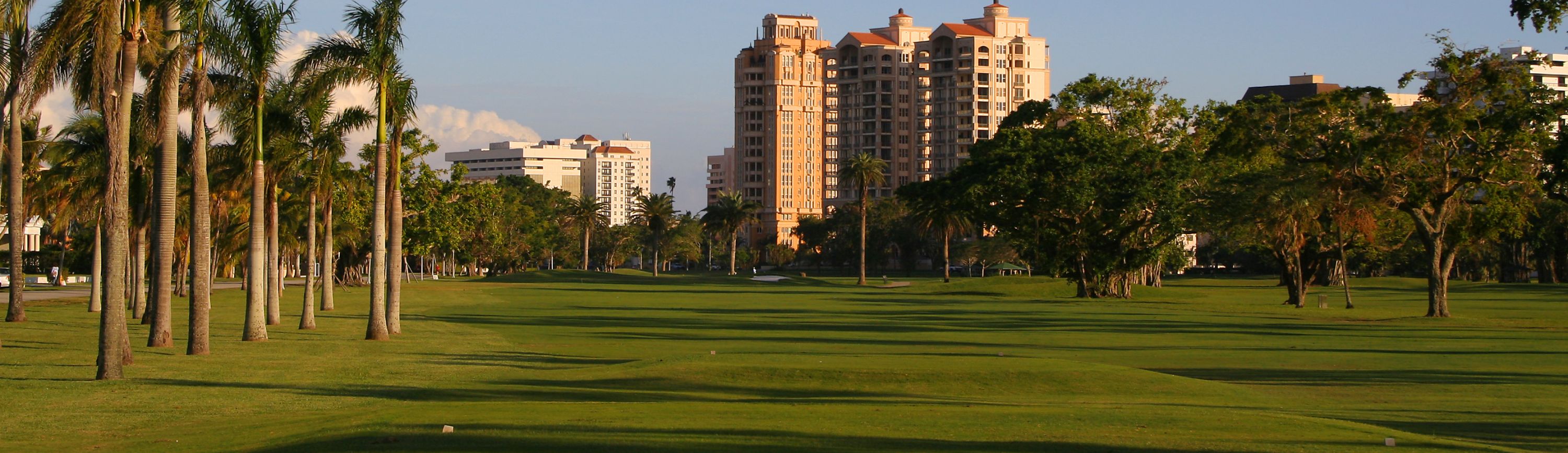
The Coral Gables and Granada Sections are perched at the northern edge of the city and represent the true origin of Coral Gables. At the heart is where George Merrick and his family first settled and grew a successful plantation on an initially modest homestead (today’s Granada Golf Course) and where the Merrick family's original homes still stand today. Some of the oldest structures sit within this area dating back to the early 1920’s and include important historical monuments from the Venetian Pool to the Coral Gables Country Club and the unique coral rock archways constructed to mark the entrance to a nascent city.
As two of the most well located neighborhoods, many residents can walk along the shaded streets to a growing selection of shops and restaurants along Miracle Mile, the tennis courts and vibrant parks at Salvadore Park and Coral Gables Country Club, and the seasonal, picturesque Venetian Pool.
Notable Streets:
- North & South Greenway Drive: Encircling the Granada Golf Course and Coral Gables Country Club, these streets are some of the most sought-after in the city with open green views to one side and prominent mansions on the other, showcasing some of the best examples of Art Deco and Mediterranean Revival architecture
- Coral Way: Arguably the city's most photographed street, Coral Way is the original route connecting a young Coral Gables to Miami's Downtown. Today, it’s well known for towering banyan & oak trees, large mansions on spacious lots and historically significant homes including Merrick House Museum and the first home George Merrick built for his wife, Eunice Peacock.
- Alhambra Circle: A green median lined with trees on both sides was originally intended to be used as a railroad track/transportation route, and today provides a picturesque setting.
- Country Club Prado: One of the original stone entrances to Coral Gables gives way to a wide green median running through the center of the street, creating a park-like setting for its select lucky residents.
Sites & Scenes:
- Merrick House - Now a museum, the Merrick family home built in 1906 gives the public a rare glimpse of life before South Florida was settled
- Granada Golf Course & Coral Gables Country Club: the building housing the Coral Gables Country Club is one of the oldest in the city and today is a destination for golf, tennis, swimming and more
- Savadore Tennis Center & Park: Clay tennis courts and newly added pickleball courts attract racquet sport enthusiasts while the tree-canopied park filled with jungle gyms and play equipment make this hot spot for young families
- Venetian Pool: George Merrick’s original vision encompassed all homes constructed of Coral Rock. After some convincing from his team of architects, he agreed to use stucco and other similar materials and commissioned Denman Fink to design a new use for the coral rock quarry: the Venetian Pool that is still in operation today.

Riviera
Riviera is one of the most prestigious and sought-after neighborhoods in all of Miami. Located near the southern part of Coral Gables, it’s also one of the most architecturally diverse with a mix of the classic Mediterranean Revival homes, mid-century modern, stylistically cohesive new construction and 5 of the 7 remaining thematic historic villages. Streets in this neighborhood tend to be a little wider with on average larger lot sizes. The famous University of Miami sits within its boundaries as well.
The location is unmatched, bordered by South Miami, Coconut Grove and central Coral Gables, providing ample spots for shopping, dining and entertainment in every direction.
Notable Streets:
- Hardee Road: a main roadway running through the heart of the neighborhood, 2 French themed historic villages, the French City and French Country Villages, sit along this road
- Granada Boulevard: winding north & south along the canal, some of the neighborhood’s most prestigious and grand estates sit along this picturesque road
- San Amaro Drive: curving along the border of the University of Miami’s tropical campus with smooth connection to the Country Club Section
Sites & Scenes:
- University of Miami: Palm tree canopies, expansive lakes, museums, sports facilities and more fill the prestigious school’s campus
- 5 of 7 Historic Villages: Including the Italian, French Country, French City, Dutch South African, and Chinese Villages. While all of the homes within are privately owned, each village is worth a visit as its carefully protected, unique architecture transports tourists and residents alike to a different era overseas
- Top Hospitals and Medical Facilities: including those at the University of Miami and Baptist Health
Interested in learning more about Coral Gables? Contact us!